Is leadership development worth the investment?
A practical guide to ROI of leadership development, its impact and what actually works
Leadership development is often one of the first areas to be cut when budgets are tight. It can feel like a “nice to have” rather than essential. Something that supports people, but doesn’t directly drive performance.
And yet, I see the lasting impact in many of the organisations I work with.
When leaders are under pressure, they often fall back into old habits. Founders get pulled back into doing rather than leading. New or recently promoted managers are expected to become leaders without much support. Decision-making slows down, priorities drift, and teams work hard but progress is uneven.
So the real question isn’t whether leadership development is worth the investment - it’s what do you gain from it.
Why leadership development matters more than ever
The demands on leaders have changed. Leadership has shifted from a traditional command and control model to one that focuses on emotional intelligence, collaboration and adaptability. Today's Leaders are expected to deliver commercial results, drive innovation, lead people through change, build trust and engagement and manage complex teams and structures.
Many step into leadership roles without any training or support. (82% of managers take on their roles without formal training (Chartered Management Institute Accidental Managers, 2023).
This shows up in practical ways such as unclear priorities and communication, inconsistent decision-making, over-reliance on a few senior leaders and teams working hard but not always making progress.
75% of workers waste up to two hours out of their working week due to inefficient managers. Management practices leading to time lost include unclear communication (33%), lack of support (33%), micro-management (26%); and lack of direction (25%) (Department for Business & Trade).
41% of employees report experiencing “a lot of stress” at work, and those who work in companies with bad management practices are nearly 60% more likely to be stressed than those working in environments with good management practices. (Gallup’s State of the Global Workplace)
These are not just leadership challenges. They are business performance issues, and in many cases, they sit behind the problems explored in this article on Why Good Strategy Fails: The Culture Gap.
What do we really mean by leadership development?
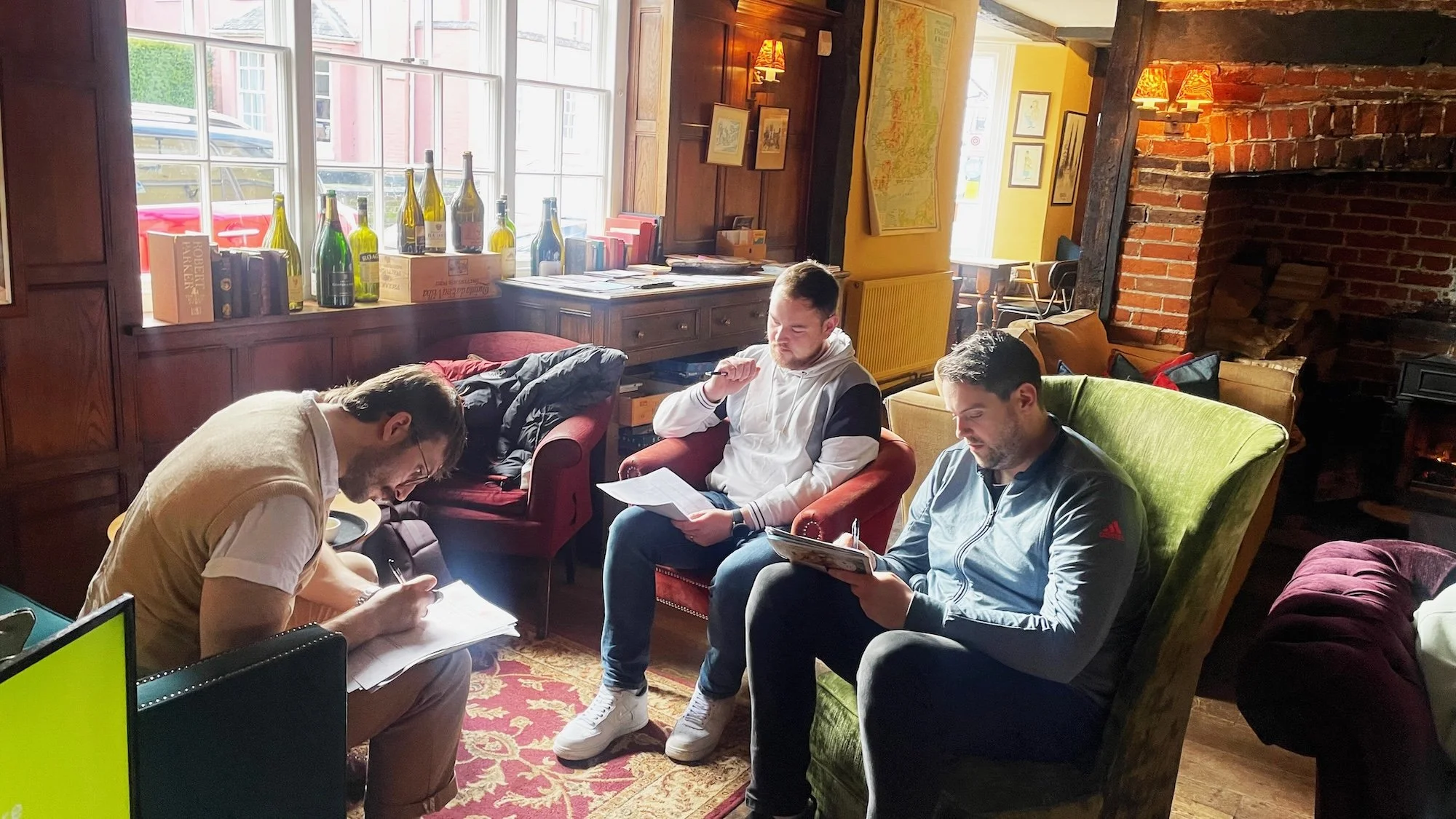
Leadership development programme
Leadership development is often misunderstood. It’s not just training courses or workshops, nor is it about theories and models. At its best, leadership development is about how leaders think, behave and work together in practice and includes:
How decisions are made and where authority sits
How leaders communicate priorities and direction
How they give and receive feedback
How they handle challenge, disagreement and pressure
How they run meetings and use time together
How they develop others, not just deliver through them
How they learn from each other and build capability across the team
How the leadership team operates as a group
It also shapes something less tangible but equally important: culture. The tone leaders set, the behaviours they model and the standards they hold become the culture others experience day to day.In other words, leadership development is not separate from the business - it’s how the business is run.
The ROI of leadership development
The return on leadership development is often discussed in terms of metrics such as productivity, engagement or retention. Those are important, but in practice, the impact shows up both in how people feel at work and how the organisation performs.
Stronger engagement, motivation and retention
People don’t leave organisations, they leave poor management. When leaders are clear, supportive and consistent, engagement increases, people feel more motivated and valued, retention improves, and stress levels reduce. This has a direct impact on cost, continuity and performance.Faster, clearer decision-making
When leadership is aligned and confident, decisions happen at the right level and at the right pace. Without that, decisions are delayed, revisited or escalated unnecessarily.Stronger alignment around priorities
Leadership development helps teams move from individual perspectives to shared direction. This is critical for strategy execution.More effective teams and a better culture
Leaders shape how their teams operate. When leaders role model trust, accountability and open communication, silos reduce, collaboration improves, feedback becomes easier, performance conversations are more effective. Culture becomes something that is actively shaped, not left to chance.Better strategy execution
Many organisations don’t struggle because the strategy is wrong. They struggle because the organisation isn’t operating in a way that supports it. Leadership development plays a key role in closing that gap between strategy, culture and delivery.

Leadership development workshop
The data
Whether you’re exploring leadership development for senior leaders or management training for new managers, the evidence shows that the Return on Investment is substantial. It’s not only the participants who’ll benefit - the results will ripple through the whole organisation driving productivity, retention and trust
A median ROI of 700%, with some organisations reporting returns of up to 5000% (Global Coaching Client Study by the International Coaching Federation (ICF).
218% higher income per employee in businesses with leadership training than those without it (ATD Research)
Every £1 spent on management and leadership development can yield £6 in ROI through increased productivity, innovation, and efficiency. The Chartered Management Institute (CMI).
37% increase in productivity from leadership training (IBM The Value of Training)
94% of employees would stay longer at a company that invests in their learning and development (LinkedIn Workplace Learning Report)
72% reduction in turnover reported by businesses that prioritise leadership development (Confederation of British Industry CBI)
What leadership development actually looks like in practice
Leadership development can be different depending on the organisation and objectives. In practice, the most effective leadership development is not a single intervention, but a combination of: structured development, real-time application, reflection, support and a focus on how leaders work together, not just individually. This is what leads to lasting change in both performance and culture.

Communication workshop
Leadership development programmes and workshops
Leadership programmes and workshops help leaders build core capability, but the most effective ones go beyond theory. They combine practical tools with real business challenges and often include peer learning or action learning sets, so leaders can learn from each other as well as the content. Typical areas of focus include:
giving and receiving feedback
communication and managing difficult conversations
emotional intelligence and self-awareness
building trust and psychological safety
decision-making, prioritisation and boundaries
leading through change
coaching skills for managers
confidence, presence and influence
managing stress and building resilience
These programmes are particularly valuable for new and emerging leaders, but also for more experienced teams who need to reset how they lead.
Coaching for leaders and managers
Coaching creates space for leaders to step back from the day-to-day, think more clearly and work through real challenges. For senior leaders and founders, this often includes: clarifying strategic direction and priorities, leading through growth, change or uncertainty, building presence, confidence and impact and navigating complexity and decision-making.
For new or developing managers, the focus is often more practical: building confidence and self-awareness, improving communication and relationships, giving feedback and managing performance, handling conflict and difficult conversations, setting boundaries and managing workload
Coaching helps leaders apply what they know in practice, not just understand it.
Leadership team development and alignment
In many organisations, the biggest shift comes not from individual development, but focusing on team effectiveness. This work focuses on helping leadership teams operate more cohesively and consistently. This is particularly important during periods of growth, change or increased complexity. That often includes:
aligning on purpose, priorities and expectations
creating a shared approach to leadership
strengthening communication and decision-making
exploring challenges collectively rather than in silos
agreeing how they show up as a team and the culture they create
Facilitated off-sites and strategy sessions
Offsites create space for leadership teams to step back from delivery and focus on the bigger picture. This can include: reviewing and refining strategy, aligning on priorities and direction, improving how the team works together, and addressing tensions or challenges that are hard to resolve day to day. The value is not just in the thinking, but in creating clarity, commitment and momentum.
How to ensure your leadership development is effective
Despite the potential, leadership development doesn’t always deliver the impact organisations expect. In most cases, the reasons are quite simple. It’s treated as a one-off event rather than an ongoing process. It isn’t clearly linked to strategy or business priorities. It focuses on individuals but ignores how the leadership team works together. Or there’s no follow-through or accountability once the programme ends.
If you want leadership development to make a real difference, a few things matter.
Start with what the business actually needs - The most effective programmes are grounded in your strategy, your culture and the real challenges your leaders are facing day to day. Not generic content.
Involve the leadership team early - Leadership development works best when senior leaders are actively involved, not just sponsoring it from a distance. Their role is to set direction, model behaviour, and create the conditions for change.
Built-in application, not just learning - Insight on its own doesn’t change behaviour. Leaders need opportunities to apply what they’re learning to real situations, reflect on what’s working and adjust over time.
Support leaders beyond the sessions - Coaching, peer learning or action learning sets help leaders embed new ways of working. Without this, it’s easy to fall back into old habits.
Focus on how leaders work together - Individual capability matters, but the biggest impact often comes from improving how the leadership team communicates, makes decisions and holds each other to account.
Track progress in practical ways - Look at what’s changing in the day-to-day. Are decisions clearer? Are priorities better understood? Are teams more aligned and engaged?

Looking for support with leadership development?
At Growth Space, we specialise in creating impactful Leadership Development Programmes tailored to your organisation’s unique challenges and goals. We offer: leadership development programmes, leadership and team coaching, strategy and leadership off-sites
Our focus is always practical - helping leaders apply what they learn to real business challenges, so it leads to clearer decisions, stronger teams and better outcomes.
If you’re thinking about how to develop your leaders or strengthen your leadership team, I’d be very happy to chat.
polly@growth-space.co.uk or call 07966 475195
How to measure the impact of leadership development
Measuring ROI in leadership development isn’t always straightforward. Some of the most important shifts show up in how the organisation operates day to day. Here are practical metrics to track progress and demonstrate impact over time.
Employee Retention: Are fewer people leaving? Are key roles more stable?
Engagement and team feedback: What are people saying in surveys or informal feedback? Are teams clearer, more motivated and better supported?
Decision-making and pace: Are decisions being made more quickly and at the right level? Is less being escalated unnecessarily?
Delivery against priorities: Are strategic priorities progressing more consistently? Are leaders following through on what they said they would do?
Time and efficiency: Are leaders spending less time firefighting and more time leading? Are meetings more focused and useful?
Cost Savings: Calculate reductions in recruitment, onboarding, and absenteeism expenses.
Leadership Confidence: Do leaders feel more confident in their role? Are they handling conversations, feedback and challenges more effectively?
Aligning these metrics with organisational goals will provide a comprehensive view of the programme’s effectiveness and help justify continued investment.