How to Choose a Strategy Facilitator: what to look for and what to ask
Choosing the right facilitator for your strategy off-site or leadership away day is one of the most important decisions in the planning process. The wrong choice leads to a day that feels managed but doesn't move anything forward. The right one creates the conditions for genuine clarity, honest conversation and real decisions.
If you have already decided to bring in an external facilitator for your strategy off-site or leadership away day, the next question is how to choose the right person. This guide walks you through what to look for, what questions to ask and what red flags to watch out for.
What does a strategy facilitator actually do?
Before you start evaluating facilitators, it helps to be clear on what you are actually hiring them to do.
A strategy facilitator is not there to present your strategy to you, tell you what your priorities should be or run a training session. Their role is to design and manage the process of the conversation so that your leadership team can think clearly, challenge each other constructively and reach genuine decisions together.
Good facilitation is largely invisible. When it is working, it feels like the leadership team is simply having a brilliant conversation. What you do not see is the careful preparation, the agenda design and the moment-by-moment judgements the facilitator is making about when to push, when to hold back and when to take the group somewhere it would not have gone on its own.
You may also be interested in this article Why use an external facilitator for a strategy off-site or away day?
The six things to look for when choosing a strategy facilitator
1. Relevant experience with leadership teams
Strategy facilitation is a specific skill. Look for someone who has extensive experience working with senior leadership teams, not just running workshops or training sessions for larger groups.
Ask directly: how many leadership team strategy sessions have they facilitated? What size of organisation do they typically work with? Have they worked with organisations at a similar stage to yours — whether that is a growing SME, a scale-up or an established business navigating change?
Experience with leadership teams matters because the dynamics in the room are more complex. People have history with each other, power dynamics are real and the stakes are higher. An experienced facilitator knows how to navigate all of that.
2. A structured approach with genuine flexibility
The best facilitators bring a clear methodology — they are not just good at conversations, they design the day with intention. Ask them to walk you through how they would approach your session. You want to see a structured process that covers:
How they prepare and what pre-work they do
How they design the agenda around your specific goals
How they handle disagreement or difficult conversations
How they ensure the day produces decisions and actions, not just discussion
At the same time, be wary of someone who has a rigid process that feels inflexible. The best strategy sessions adapt to what is actually happening in the room. A skilled facilitator should be able to describe both their structure and how they work when things go in an unexpected direction.
3. The ability to challenge as well as support
Facilitation is not simply keeping a conversation moving. A strong strategy facilitator is willing to challenge the group — to name assumptions, surface tensions and ask questions that feel uncomfortable.
This is harder than it sounds. It requires a combination of credibility, confidence and emotional intelligence. The facilitator needs enough commercial and strategic understanding to know when something important is being glossed over, and enough interpersonal skill to raise it in a way the group can hear.
In your initial conversations with a potential facilitator, notice whether they push back on you, ask genuinely curious questions about your business or simply reflect back what you say. The former is a good sign. The latter is not.
4. Good fit with your culture and leadership team
Your leadership team needs to trust and respect the facilitator in the room. That means the person's style, communication and approach need to feel right for your culture.
A facilitator who works beautifully with a creative agency might not be the right fit for a professional services firm — and vice versa. This is not about finding someone who will simply validate everything your team already thinks. It is about finding someone whose presence and approach will help your specific team open up, challenge each other and do their best thinking.
Most good facilitators will offer an initial conversation before you commit. Use it to get a sense of whether the chemistry feels right. Ask your fellow senior leaders what they need from the day and whether this person seems likely to create those conditions.
5. Thorough preparation and pre-work
The quality of a strategy session is largely determined before the day itself. Ask any facilitator you are considering what their preparation process looks like.
You should expect them to:
Have a detailed briefing conversation with you about the context, goals and challenges
Review relevant documents — previous strategy, board papers, financial performance, team structure
Speak with members of the leadership team individually beforehand, either in writing or on a short call
Use those conversations to design an agenda that reflects what the team actually needs, not a generic off-the-shelf programme
If a facilitator seems happy to design the day based on a single brief and not much else, treat that as a warning sign.
6. A focus on what happens after the session
A strategy off-site is not a success simply because people leave feeling energised. It is a success when the clarity, decisions and commitments from the room translate into action in the weeks that follow.
Ask facilitators what they do to ensure the work lands beyond the day. This might include producing a clear written summary of decisions and actions, offering a follow-up check-in with the leadership team, or building in a commitment framework during the session itself that makes accountability explicit.
The best facilitators think about the whole arc of the work — before, during and after — not just the day in the room.
Questions to ask a strategy facilitator before you hire them
Here are the questions worth asking in your initial conversation:
About their experience:
How many leadership team strategy sessions have you facilitated?
What size and type of organisations do you typically work with?
Have you worked with businesses at a similar stage to ours?
Can you share a case study or example of a similar session?
About their approach:
How do you prepare for a strategy session?
How do you design the agenda, and how much input do we have in that?
What happens if the day goes in an unexpected direction?
How do you handle it when there is tension or disagreement in the room?
About outcomes:
How do you ensure the day produces decisions and actions, not just discussion?
What do you do after the session to help the work land?
How will we know if the session has been a success?
About fit:
What do you need from us to make this session as good as it can be?
Is there anything about our context that would change how you approach this?
The answers to these questions will tell you a great deal about whether this is the right person for your leadership team.
What does a strategy facilitator cost?
Facilitation fees vary depending on the experience of the facilitator, the complexity of the session and the level of preparation involved. A half-day session with limited pre-work will cost less than a two-day off-site with individual interviews, bespoke design and a follow-up session.
As a rough guide, experienced strategy facilitators working with UK leadership teams typically charge a day rate rather than a fixed price, and most well-designed off-sites involve preparation time as well as the day itself. Rather than focusing on headline cost, it is worth asking what is included — pre-work, design, the session itself and any follow-up support.
The clearer your brief, the more accurate any proposal will be. Most facilitators will offer an initial conversation at no cost, which is a good opportunity to get a sense of their approach and discuss investment at the same time.
Red flags to watch out for
They cannot describe their methodology clearly. Good facilitators can explain how they work and why. Vague answers about "creating space" or "going with the flow" without any description of structure or process should give you pause.
They do not ask many questions about your business. A strong facilitator is genuinely curious about your context. If someone seems ready to jump straight to proposing a design without wanting to understand your organisation in depth, that suggests a one-size-fits-all approach.
They have no relevant references or case studies. You should be able to speak with a past client or read detailed case studies of similar work. Testimonials alone are not enough.
They focus entirely on the day itself. Preparation and follow-through matter. A facilitator who only talks about what happens in the room is missing a significant part of what makes strategy sessions work.
The price seems very low. Experienced strategy facilitators who work with leadership teams charge accordingly. A very low day rate often signals limited experience or a surface-level approach.
What good looks like
When you have found the right facilitator, you will know. They will have asked you more questions than you asked them. They will have pushed back gently on some of your assumptions. They will have made you feel that they understand your organisation and your leadership team — and that they have a clear idea of how to design a day that works for your specific context.
Most importantly, they will feel like a genuine thinking partner rather than a service provider.
Working with Growth Space on your strategy off-site
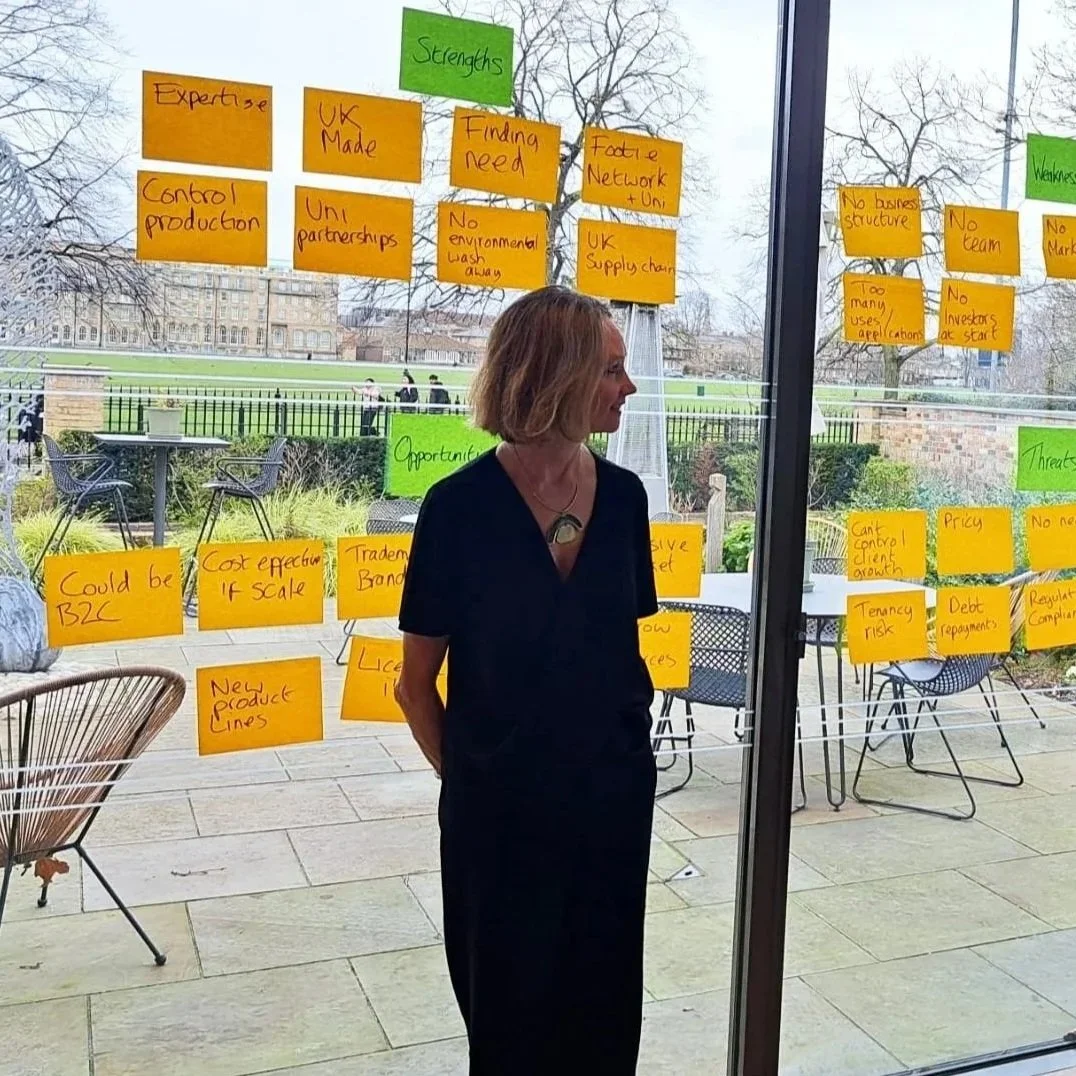
Polly Robinson, Growth Space - Strategy Facilitator
At Growth Space, we work with leadership teams across the UK to design and facilitate strategy off-sites, leadership away days and planning sessions that produce real clarity, alignment and momentum.
Every session starts with thorough preparation, understanding your context, your team and the challenges you are navigating, and is designed specifically around what your leadership team needs to achieve.
We bring structure and rigour to the process, while creating the warmth and psychological safety that helps leadership teams have the honest conversations that matter.
If you are planning a strategy off-site and would like to explore whether we are the right fit, we would be very happy to have a conversation — no commitment required.
Polly Robinson — Facilitator, Executive Coach & Leadership Specialist
Get in touch: polly@growth-space.co.uk or call 07966 475195