A coaching approach to management: a practical guide
When managers rely solely on telling, directing, fixing and stepping in with answers, people soon become dependent on themA coaching approach changes that dynamic and helps you:
Develop people rather than fix problems for them
Create trust and engagement
Reduce micromanagement
Encourage ownership and decision-making
Support more resilient and high-performing teams
Coaching happens in everyday moments: one-to-ones, problem-solving conversations, and feedback.
This article is a practical guide to how to use a coaching approach in your day-to-day management.
What is a coaching approach to management?
At its simplest, coaching as a manager means shifting from telling to enabling. Instead of jumping in with answers, you create the conditions for your team to think, learn and solve problems for themselves, with your support. That doesn’t mean you never give direction, just that you’re more intentional about when you do.
It’s useful when:
Someone is capable but lacks confidence
The same problems keep landing back on your desk
You want people to think more independently
The coaching skills every manager needs
You don’t need to be trained as a coach to use a coaching approach; you just need to practise a few core skills consistently.
Active listening
Most managers listen with half their attention while mentally preparing their response, thinking of a solution or even what they need to do next. Coaching requires something different - active listening. This means:
Giving your full attention to what is being said, and also to body language
Not interrupting, making assumptions or jumping ahead
Listening for what’s behind the words, not just facts
Not responding immediately, but leaving a pause or silence to see what else emerges
Summarising or reflecting back on what you’ve heard to check your understanding
Try this: In your next one-to-one, notice how quickly you move to problem-solving. Pause for a few seconds longer than feels comfortable before responding.
Reflect:
Do I listen to understand, or to respond?
When was the last time silence led to a better answer?
2. Ask better questions
Good coaching conversations are built on questions, not telling, directing or giving instructions. Good questions encourage reflection and help people take ownership. Rather than suggesting: “Here’s what I’d do…” or “You should probably…”, try asking:
“What options have you considered?”
“What feels most important to focus on here?”
“What’s getting in the way?”
“What would success look like for you?”
Reflect:
Do I ask questions to help people think, or to steer them to my answer?
Which questions open conversations rather than close them?
3. Use a simple coaching structure: the GROW model
The GROW model offers a helpful and flexible framework. You don’t need to follow it rigidly. Think of it as a guide.
G – Goal
What do you want to achieve or what would be a positive result? This sets the aim of the conversation.
What are you hoping will change?
“What would you like to get out of this conversation?”
R – Reality
What’s happening now? This is about understanding the current situation without judgment.
“What’s working well at the moment?”
“What’s making this difficult?”
“What have you already tried?”
O – Options
What could you do? This is where you resist the urge to jump in with solutions.
“What options do you see?”
“What else could you try?”
“If constraints weren’t an issue, what would you try?”
You can add ideas if needed, but only after they’ve explored their own thinking.
W – Way forward
What will you do next?
“What’s the first step?”
“What support do you need from me?”
“When will you do that?”
You’re helping them commit to something concrete, not just talk it through.s builds capability rather than dependency.
4. Bring coaching into everyday moments
Coaching conversations don’t need to be long or formal, and they often happen in small unplanned moments.
One-to-ones
Treat these as thinking space, not just reporting, update or status meetings. Encourage your team member to bring:
What’s going well
What’s challenging
What support they need
What they want to develop
Reflect:
Who sets the agenda in my one-to-ones?
Do these conversations build confidence and clarity?
Problem-solving
When someone brings you a problem, resist the urge to fix it. instead ask:
“What do you think the root issue is?”
“What have you learned so far?”
“What would you do if I wasn’t here?”
Feedback and performance conversations
Coaching helps shift feedback from judgement to development. Instead of focusing only on outcomes, bring behaviours into the conversation:
“What helped this go well?”
“What would you do differently next time?”
“What support would strengthen this?”
This links performance to learning and growth, not just targets.
Delegation and letting go
Many new managers struggle to let go of doing. A coaching approach helps you delegate thinking, not just tasks. Before stepping in, ask:
“What decision do you feel confident making?”
“Where would you like my input?”
Reflect:
What am I holding onto that someone else could learn to do?
Am I delegating tasks, or responsibility?
Common traps and how coaching helps
Having all the answers - Leaders and managers often feel they should be able to fix everything. Coaching reminds you that your role is to enable thinking, not to be the expert on everything.
Avoiding difficult conversations - A coaching structure gives you a way in, without blame or avoidance.
Managing former peers - Coaching shifts relationships from “mate” or “expert” to “supportive leader”.
Rescuing - If you’re always rescuing and fixing things for other people, they never build confidence. Coaching changes that.
Building the habit over time
Coaching isn’t something you switch on overnight. Start small:
Pick one or two questions to practise
Use GROW in one conversation a week
Notice when you default to telling or directing
Why does leadership coaching and development help
Most managers are promoted without being taught how to manage people. Many managers understand the idea of coaching, but struggle to apply it consistently under pressure.
Research from the Chartered Management Institute shows that managers who receive training and development feel more confident, more adaptable and better equipped to lead others. In practice, leadership coaching and development programmes create space to think, practise new skills, build confidence and develop an authentic leadership style
If you’re a manager wanting to use a coaching approach more effectively, or an HR or L&D professional looking to build coaching capability across your organisation, this is exactly the kind of work we support.
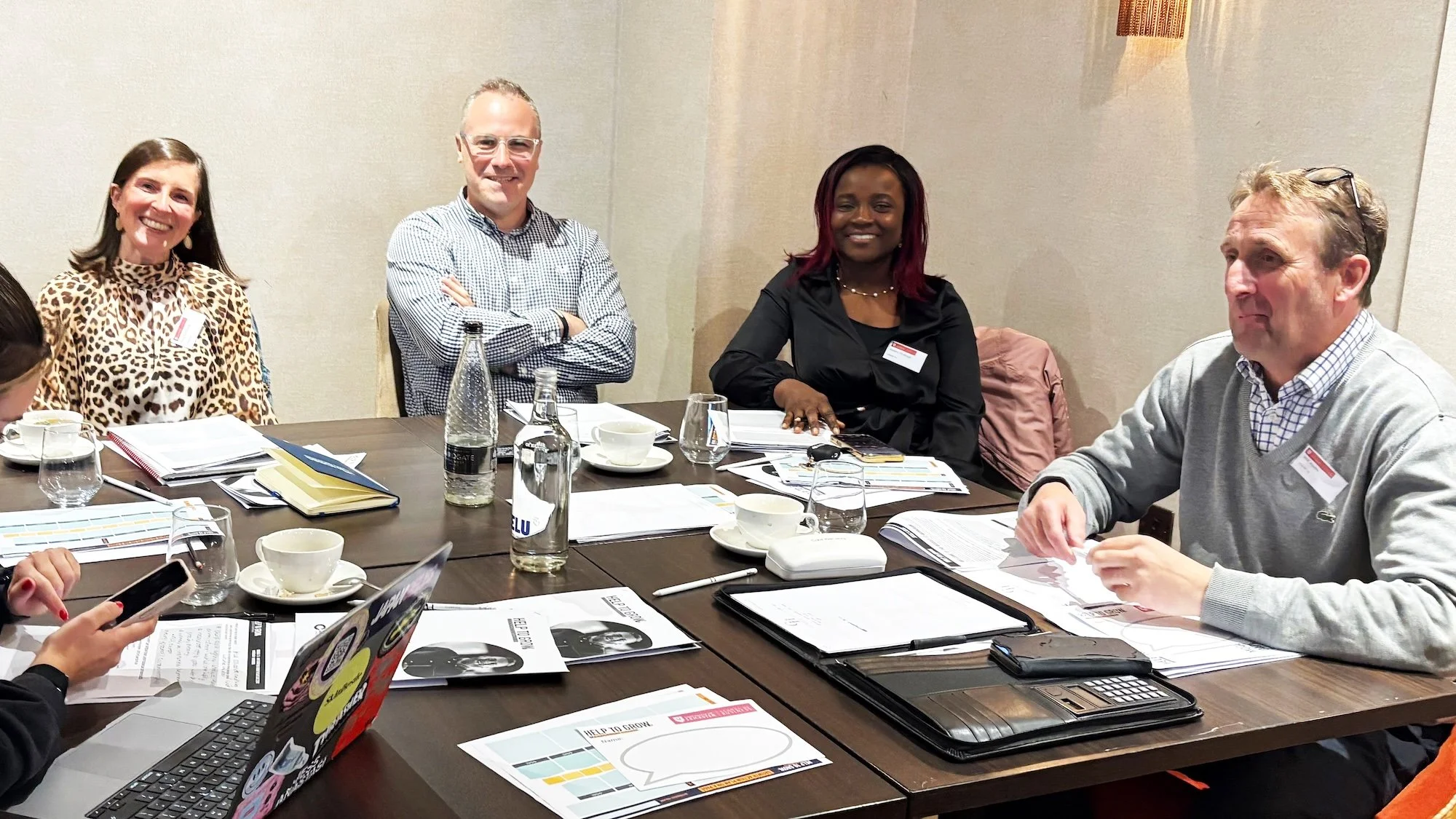
We support managers to:
Practice coaching conversations in real scenarios
Strengthen listening and questioning skills
Use simple frameworks like GROW without sounding scripted
Balance coaching with clarity and accountability
You can find out more about leadership development and coaching here >
Or email hello@growth-space.co.uk to set up a complimentary coaching call.